
This guide is for power developers, owner's engineers and EPC planners who need to understand the civil half of a generation project. The takeaway: power plant civil work is heavy, dynamic-load engineering delivered against an OEM erection schedule — the crane, not the concrete, sets the sequence.
The heavy foundations: TG deck and boiler
The two signature structures of a thermal station are civil works:
- Turbo-generator (TG) foundation — a framed RCC deck (table-top) carrying the turbine and generator. Design to IS 2974 requires dynamic analysis so the structure's natural frequencies stay clear of machine speed; construction requires embedded-part and anchor-bolt setting to millimetre tolerance, typically with a continuous deck pour and strict thermal control.
- Boiler supporting structure foundations — the boiler hangs from a structural steel frame, and its foundations transfer thousands of tonnes of dead load plus wind and seismic demands per IS 456 and IS 1893.
Both are survey-intensive: OEM erection tolerances are unforgiving, and a mis-set bolt group is discovered exactly when the heaviest lift on site is waiting.
Cooling towers and chimneys: the tall civil works
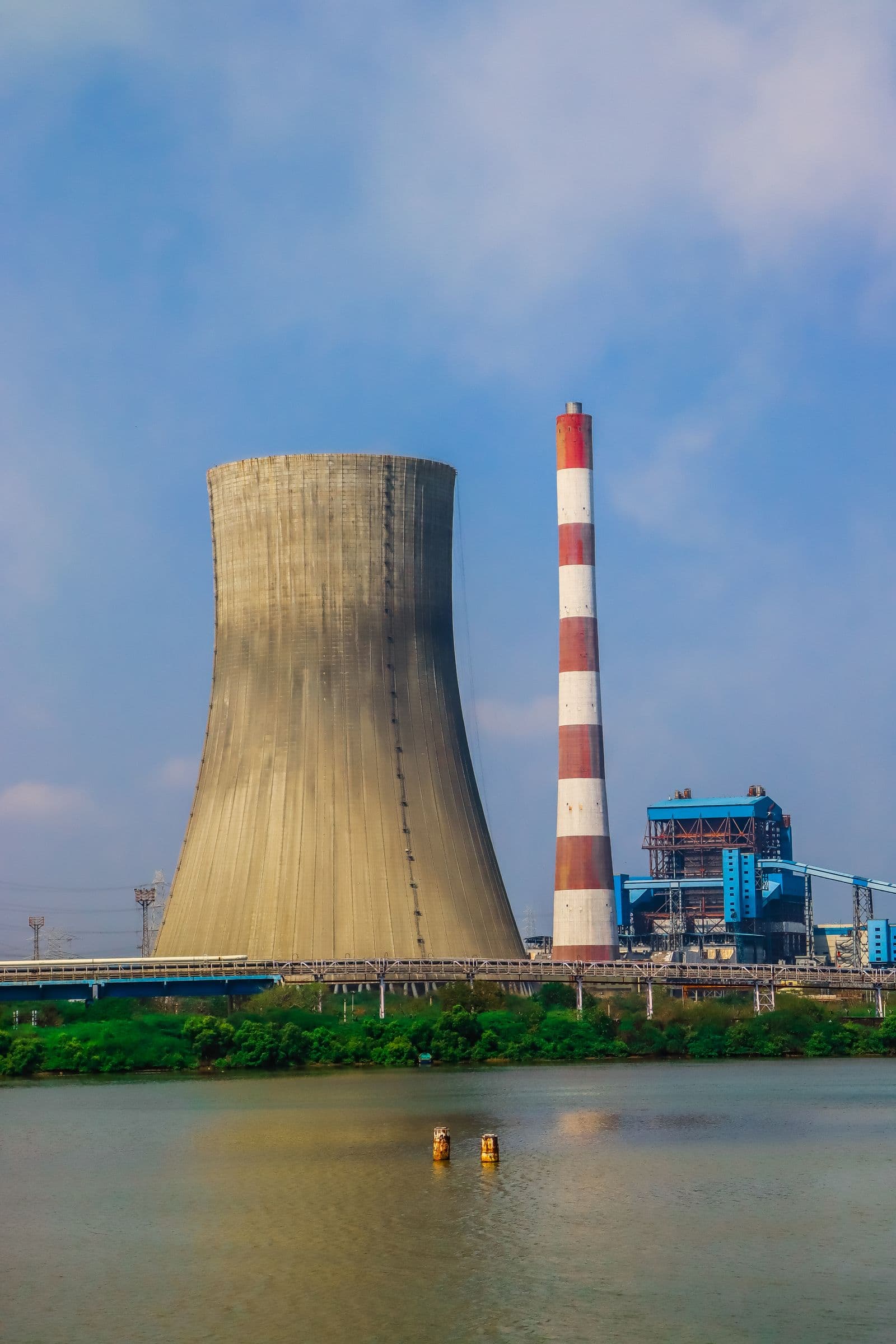
- Natural-draught cooling towers — hyperbolic RCC shells cast by climbing formwork, one of the most specialised concrete operations in civil engineering; induced-draught cells are the lower-profile alternative with their own basins and supporting frames.
- Chimneys — slip-formed or jump-formed RCC windshields with internal flues, designed to IS 4998 (RCC chimney criteria). Slip-forming is a continuous, 24-hour operation demanding uninterrupted concrete supply and disciplined crews.
Both structures also anchor the plant's circulating-water system: forebays, CW ducts, and pump houses whose water-retaining elements follow liquid-retaining concrete practice.
Material handling and the balance of plant
Around the power island sits a network of civil scopes that decide whether fuel and ash actually move:
- Conveyor galleries, transfer towers, crusher houses and stockyard structures (coal and ash handling).
- Wagon tipplers and track hoppers with their deep RCC pits.
- Pump houses, water-treatment and effluent structures.
- Cable and pipe trenches, equipment plinths, transformer foundations with blast walls and oil-containment pits.
- Roads, drains and the plant's stormwater system.
Individually modest, collectively these balance-of-plant works are thousands of embedded plates and dozens of vendor interfaces — the coordination load is the work.
Sequencing around OEM erection
Power plant civil work is programmed backwards from the erection milestones in the OEM's schedule: boiler foundations feed structural steel erection; the TG deck feeds turbine placement; CW system civil feeds hydraulic testing. CEA guidelines and the owner's engineer's specifications frame the design; the OEM's foundation loading data and embedment drawings drive the details. A civil contractor's real deliverable is predictability — handing over each foundation, surveyed and accepted, on the date the erection crane needs it.
Procurement note: ask bidders how they manage embedded-part control (procurement, setting, survey sign-off) and what their slip-form/climbing-form resources are. These separate power-plant-capable contractors from general civil contractors.
Where Valis Infra fits: we deliver TG and boiler foundations, cooling tower and chimney civil, and balance-of-plant works as a power plant civil contractor, sequenced tightly around OEM erection.